Choosing White Pomfret: A Practical Paplet Buying Guide
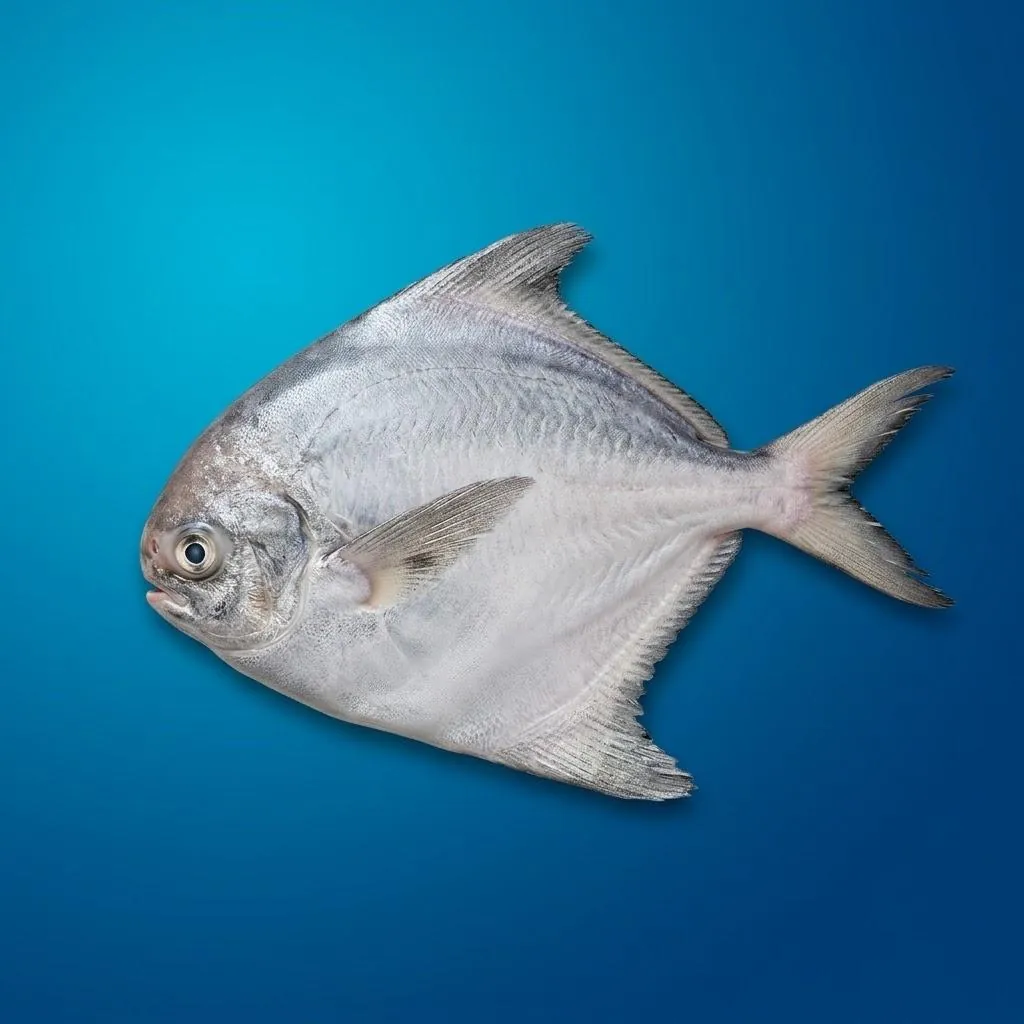
White Pomfret, or Safaid Paplet, is the fish many families save for guests, Eid dinners and cold winter evenings. It is delicate, sweet and usually cooked whole, which means the quality of the fish shows on the plate – there is no thick masala gravy to hide a tired fish. Here is how to choose a good one and order exactly what you need.
Know Your Pomfret
True White Pomfret is the silver pomfret, Pampus argenteus. It is a flat, rounded, almost diamond-shaped fish with silvery-white skin, a small blunt head and a deeply forked tail. A useful identification point: it has no pelvic fins on its underside. Its scales are tiny and come off easily, so a little scale loss is normal.
It is often confused with Black Pomfret (Kala Paplet). Despite the name, Black Pomfret is a member of the jack family and is not a true pomfret. It is darker grey-brown, has firmer and richer flesh, and suits stronger masalas and the grill. If you want soft, mild, white flesh, choose White Pomfret.
Freshness Checks for White Pomfret
Skin and colour
Fresh Safaid Paplet has bright, pearly silver skin with a clean sheen. Dull grey, dry or yellowish skin is a sign of age or poor chilling. Some light scale rubbing is normal; heavy bruising or torn skin is not ideal, especially if you plan to fry the fish whole.
Eyes
The eyes should be clear, glossy and slightly bulging. Cloudy, sunken or grey eyes suggest the fish has been out of the water for a while.
Gills
Gently lift the gill flap. Bright red or deep pink, moist gills are a good sign. Brown, grey or sticky gills mean the fish is past its best.
Smell
A fresh pomfret smells mild and of the sea. Any sour or ammonia smell – often first noticed near the belly – means you should not buy it.
Feel
Pomfret flesh is naturally soft, but the body of a fresh fish should still feel firm and springy, not floppy. Press gently near the thickest part: the dent should bounce back. A belly that feels very soft or has split can indicate the fish was not gutted or chilled promptly.
Picking the Right Size
Pomfret size has a big impact on how you cook it.
- Small to medium fish are ideal for one person per fish. They fit easily on a tawa, cook through quickly and look lovely served whole.
- Larger fish have thicker flesh and are good for sharing, for baking in foil, or for cutting into slices for salan.
- Very large fish are often valued for special occasions. Make sure your pan or oven tray is big enough – a whole pomfret should lie flat to cook evenly.
If you are cooking for guests, matching sizes so each person gets a similar fish makes serving easy. Mention this in your order note.
Matching the Cut to Your Dish
White Pomfret is offered as Whole (uncleaned), Whole and Gutted, Headless and Gutted, or Slices.
| Dish | Recommended cut | Notes |
|---|---|---|
| Whole red masala fry | Whole and Gutted | Classic presentation; score the sides before marinating |
| Hari (green) masala pomfret | Whole and Gutted | Stuff the cavity and slits with green chutney masala |
| Steamed pomfret | Whole and Gutted or Headless and Gutted | Headless fits steamers more easily |
| Foil-baked pomfret | Whole and Gutted | Keeps the delicate flesh moist |
| Pomfret salan | Slices | Thick slices from larger fish hold best in gravy |
| Home cleaning preference | Whole (uncleaned) | Only if you are comfortable gutting and scaling |
White Pomfret is not offered as boneless fillet. Its thin, flat body is best cooked on the bone, which also keeps it juicy. If boneless is a must, consider our fresh sea fish options that offer boneless cuts, or the boneless range.
Seasonality, in General Terms
Pomfret supply in Pakistan changes through the year with weather, sea conditions and fishing restrictions, and sizes can vary from week to week. Demand typically rises in winter and around festive occasions. Instead of planning around a fixed month, ask for today's stock and available sizes when you order.
Ordering White Pomfret Online
On the White Pomfret (Safaid Paplet) product page, keep these points in mind:
- Select the cleaning option. Whole and Gutted is the safest default for most recipes.
- Say how you will cook it. "Whole fry, one fish per person" or "slices for salan" helps with selection.
- Think about weight versus number of fish. Whole fish weight includes head, bones and fins. If you need a set number of fish, mention it.
- Prepare space. Clear a flat spot in the fridge or freezer so the fish can lie without being squashed.
- Check availability. If you need fish for a specific event, contact FishMart in advance to ask about stock.
Common Mistakes When Buying Pomfret
- Buying the biggest fish for frying. Very large pomfret can be hard to fry evenly on a home tawa. Medium fish are more forgiving.
- Choosing slices for whole-fish recipes. Slices are great for salan, but whole fry and steaming need a whole or headless fish.
- Stacking fish. Pomfret flesh is soft; stacking heavy packs on top can bruise it.
- Over-washing. A gentle rinse is enough. Scrubbing tears the delicate skin.
- Mixing it up with Black Pomfret. They cook differently. White is soft and mild; black is firmer and richer.
Pick a Good Paplet
A bright silver skin, clear eyes, red gills, a clean smell and a springy body – those are the marks of a good White Pomfret. Choose the size by how you will serve it and the cut by the recipe. When you are ready, visit the White Pomfret page to choose your cleaning option, then try our White Pomfret recipes for fry, steam and green masala ideas.
Frequently asked questions
Why are some scales missing from my pomfret?
Silver pomfret has very fine scales that rub off easily during handling and icing. Some scale loss is normal and does not mean the fish is old.
Is one pomfret per person enough?
For small to medium fish served whole with sides, one fish per person is a common guide. With larger fish, one fish can often be shared between two.
What does the lack of pelvic fins tell me?
Silver pomfret has no pelvic fins on its underside. It is one of the features that helps distinguish it from look-alike fish such as Black Pomfret.
Should I buy pomfret uncleaned to judge freshness?
Uncleaned fish lets you check gills and belly, but most people prefer Whole and Gutted for convenience. Eyes, skin, smell and firmness still tell you a lot.