Black Pomfret (Kala Paplet) Buying Guide: Freshness, Size and Cuts
Black Pomfret, or Kala Paplet, has a loyal following in Karachi among people who like a fish with a bit more character. Its firm, meaty flesh and fuller flavour make it a favourite for whole masala fry and charcoal grilling, and it holds up beautifully in a tangy achari salan. Because it is usually cooked whole, freshness shows up right on the plate – in the crispness of the skin and the sweetness of the flesh. This guide explains how to choose a good Black Pomfret (Kala Paplet), which size and cut to pick, and how to order it with confidence.
Know Your Paplet: Black vs White
Pakistani markets sell two very different fish under the "pomfret" name. White Pomfret (Safaid Paplet) is Pampus argenteus, a true pomfret with silvery skin and very soft, delicate white flesh. Black Pomfret is Parastromateus niger, a member of the jack family. It has darker skin, a sharply forked tail with longer fins, and firmer, richer meat. Neither is "better" – they suit different dishes. If your family prefers a subtle, melt-in-the-mouth fish, choose white. If you want bold masala and a meaty bite, choose black.
How to recognise Black Pomfret
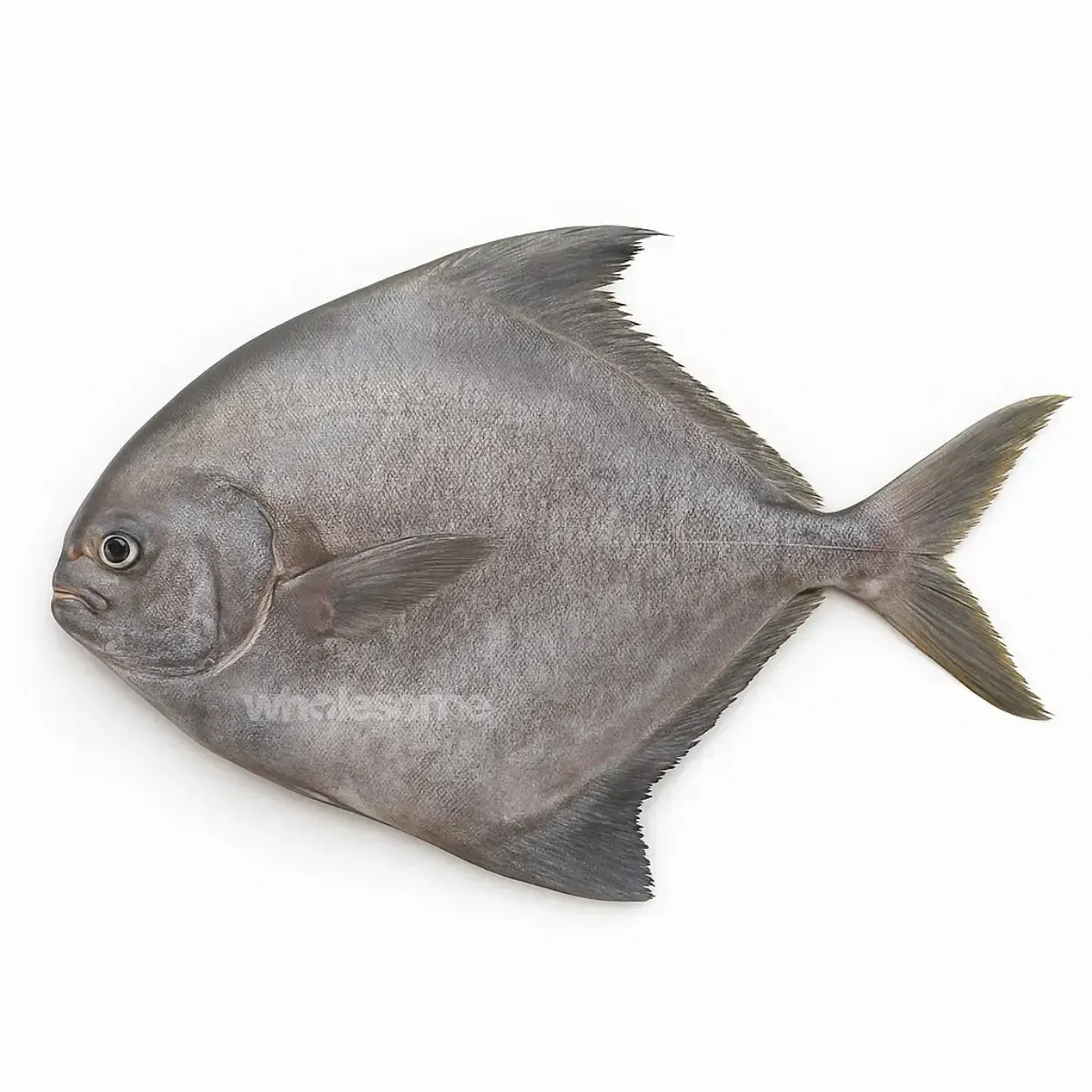
- Shape: a deep, flat, oval-to-diamond body with a small, blunt head.
- Colour: dark grey, steel-blue or brownish-black, often with a silvery sheen on very fresh fish.
- Fins: long, curved dorsal and anal fins and a deeply forked tail.
- No pelvic fins: adults lack the small paired fins under the belly.
Freshness Checks
Eyes
The eyes should be clear, bright and slightly bulging. Kala Paplet's eyes cloud over as it ages; sunken or milky eyes mean it has been out of the water too long or poorly chilled.
Gills
Lift the gill cover. Fresh gills are bright red and moist. Dull brown, grey or slimy gills are a clear sign to choose another fish.
Skin
Fresh black pomfret has glossy, dark, almost metallic skin. As it ages the skin dulls, the colour turns patchy or faded, and a thick or sticky slime appears. Small scales should stay attached.
Smell
A good fish smells clean and briny. Because the flesh is richer than white fish, a stale black pomfret develops a strong, unpleasant odour quickly – trust your nose.
Firmness
Press the thickest part of the body near the head. Kala Paplet should feel firm and spring back immediately. A soft, sagging belly or a dent that stays are signs of age.
Checking Slices
- Colour: raw flesh is naturally a little darker than white fish – off-white to faintly grey or pink near the skin – but it should look moist and glossy, not brown or dried out.
- Bloodline: the dark band along the spine should be red, not brown or black.
- Structure: flesh should be tight against the bone, with no gaping or separating flakes.
- Smell: clean, with no sourness.
Choosing Size and Cut
Black pomfret is sold in a range of sizes depending on the catch. As a general rule, small and medium fish are best cooked whole, while larger fish give generous slices.
| Dish | Best cut | Size tip |
|---|---|---|
| Whole masala tawa fry | Whole and Gutted | Small to medium, so it fits the tawa and cooks through. |
| Charcoal or oven grill | Whole and Gutted | Medium fish; score deeply. |
| Achari salan or curry | Slices | Larger fish give thicker, meatier slices. |
| Quick weekday tawa fry | Slices | Thick slices cook faster than whole fish. |
| Custom portioning at home | Headless and Gutted | Any size. |
If you prefer to clean the fish yourself and check everything, choose Whole (uncleaned). Note that black pomfret is not offered as boneless fillet – its flat shape gives thin fillets that are best enjoyed on the bone.
Seasonality
Pomfret catches vary with sea conditions, weather and fishing activity, and many families buy more fish in the cooler months when fried and grilled fish is a winter tradition. Availability of particular sizes can change from week to week, so it helps to be flexible and ask what is in good supply.
Ordering Online: What to Specify
- Select your cut from the options on the Black Pomfret product page.
- Say how you will cook it in the order notes – "whole for tawa fry, please score" or "thick slices for salan".
- Ask about size if you need a specific number of whole fish for a dinner, rather than just a weight.
- Remember the yield: cleaning removes guts, gills, fins and sometimes the head, so the cooked weight is less than the starting weight. Check the product page for how weight is listed.
- Get ready to store it: make fridge space, or plan to freeze anything you will not cook within 1–2 days.
Common Mistakes
- Treating it like White Pomfret. Black pomfret needs a little longer to cook and takes bolder seasoning.
- Buying one large fish for frying whole. Very large fish may not fit the pan or cook evenly – choose two medium fish instead.
- Skipping the scoring. Unscored whole fish stays undercooked at the spine while the outside overcooks.
- Not trimming the fins. The fin edges are sharp and burn easily; snip them with scissors.
- Judging by colour alone. Darker raw flesh is normal for this species – use eyes, gills and smell to judge freshness.
Choose a Good One
Glossy dark skin, bright eyes, red gills, a clean smell and firm flesh are the marks of a good Kala Paplet. Once you have it, try our Black Pomfret masala fry and grill recipes, browse the /product-categories/fresh-sea-fish range, or order Black Pomfret whole or sliced.
Frequently asked questions
Which is better for frying, black or white pomfret?
Both fry well. Black pomfret gives a firmer, meatier result that suits bold masala; white pomfret is softer and more delicate.
Can I get Black Pomfret as boneless fillets?
No. It is offered whole, whole and gutted, headless and gutted, or in slices. Its flat shape is best cooked on the bone.
How many whole fish should I order for a dinner?
It depends on size and what else you are serving. As a guide, one medium fish serves one or two people. Contact FishMart if you need a particular number of fish.
Is a dull grey colour a bad sign?
Fresh Kala Paplet is glossy and dark, often with a silvery sheen. Dull, patchy or faded skin, especially with cloudy eyes, suggests the fish is not fresh.